
The Social Media Trap: Why “Posting Consistently” Isn’t a Strategy
Every marketing playbook usually says the same thing: show up consistently. Post every day and stay visible to feed the algorithm.
And so, on Mondays, you may find yourself encouraging the team to “stay consistent.” The whiteboard fills with ideas: reels, quotes, behind-the-scenes shots. Someone stays up late scheduling everything. The feed looks full, the calendar is checked, and for a few days, it feels like momentum.
Then a week passes. Nothing moves. No new enquiries. The likes come from the same five loyal names of family, friends, maybe your designer.
By Friday, the excitement turns into quiet resentment. You’re doing everything the gurus said to do. You’re posting consistently. And still, nothing sticks.
That’s the trap.
Sure, the feed looks alive, but it’s just motion. No recall. No trust.
That’s what happens when consistency becomes the goal instead of connection.
On Social Media, Activity Isn’t Authority
Most businesses confuse visibility with credibility. They think being seen is the same as being remembered. It’s not.
A tourism operator posts sunset photos that could belong to anyone. Or a professional service firm posts “Happy Friday!” memes that quietly chip away at their authority.
This is activity without direction. It burns time and bandwidth but builds nothing. A consistent schedule without a consistent story is a treadmill. You look busy, but you’re not moving forward.
What the Algorithm Actually Rewards
Don’t get us wrong. There was a time when social media strategy used to be about timing and volume. Now, it’s about pattern recognition. Algorithms, audiences, and attention all reward coherence. This is the ability for your content to sound like it’s coming from one brain, even when it’s created by five different people.
Here’s what that looks like in practice:
Signal | What It Means | What It Builds |
Clarity | Your message holds shape across time. | Direction |
Context | Each post connects to a bigger story. | Meaning |
Consistency | Your tone stays steady across platforms. | Trust |
Clarity tells people what you stand for.
Context shows why you matter.
Consistency proves you mean it.
That’s what real brand consistency looks like.
The Hidden Cost of Fragmentation
Fragmentation never happens all at once. At first, the posts go out on time and the captions sound confident. Then one small change slips through (maybe a different tone in the copy, a new colour in the design). A few weeks later, someone else joins the team and brings their own “style.” The next month, a freelancer takes over for a bit and writes the way they think the brand should sound.
By the end of the quarter, your feed feels like a patchwork. Nothing’s technically wrong, but something’s off.
The captions don’t feel like they’re from the same voice. The visuals don’t hold together. The rhythm that made the brand recognisable (that sense of tone, timing, and taste) is gone.
And that’s the real cost of fragmentation.
To people, it reads as inconsistency. To algorithms, it looks like confusion. Both quietly pull away.
The algorithm stops grouping your content together because it can’t recognise a pattern. Your audience stops trusting your tone because it no longer sounds like one person talking.
A few fragmentation examples for you:
Type of Fragmentation | What It Signals | What It Costs |
Tone inconsistency | Unreliable identity | Lower trust and reach |
Visual inconsistency | Disconnected brand memory | Decreased recall |
Erratic posting | No clear behaviour pattern | Algorithmic deprioritisation |
The Real Villain: The Posting Calendar
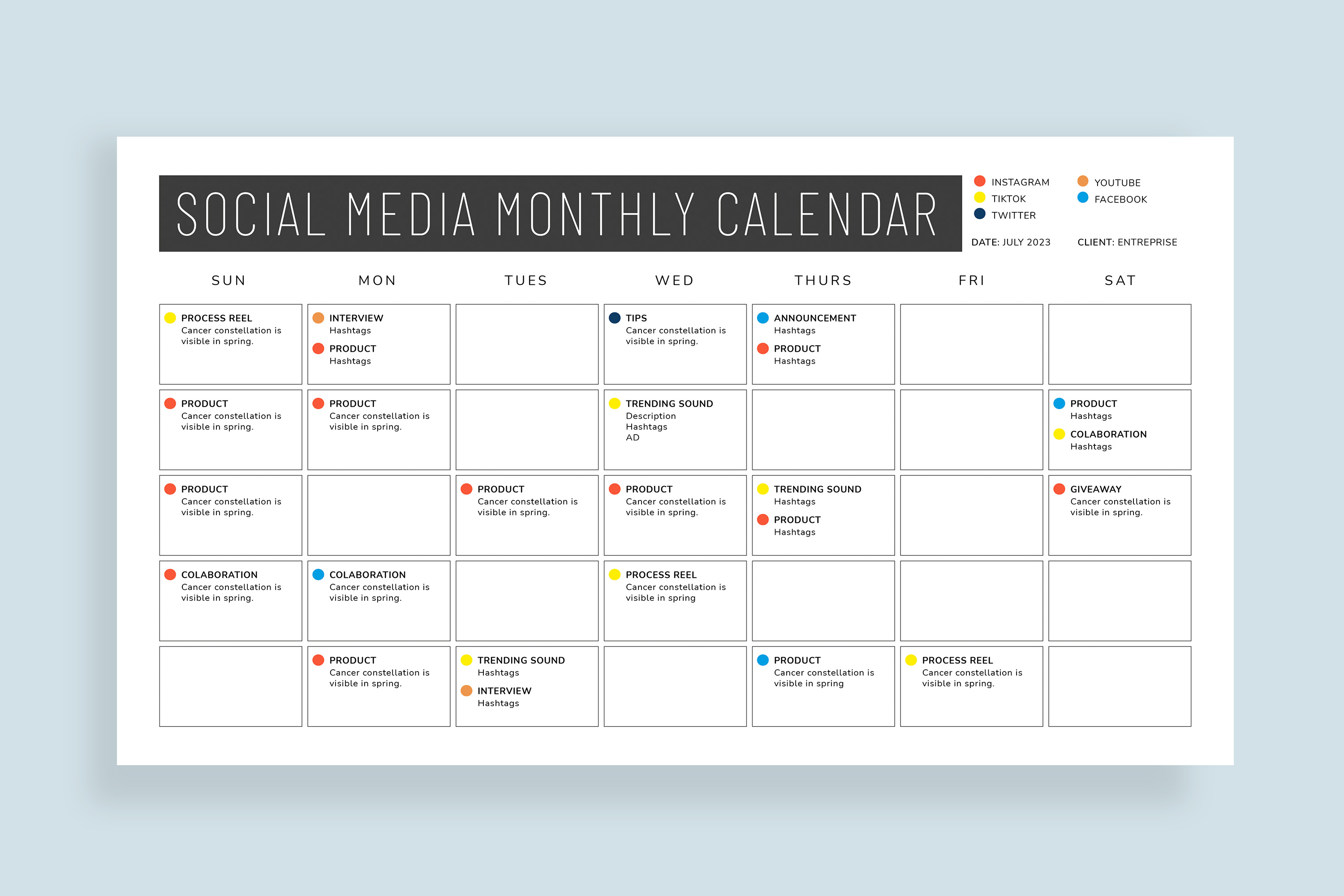
Calendars are comforting. They make teams feel like they’re in control. But what most businesses don’t realise is that calendars often replace strategy with maintenance. You’re feeding a machine, not building a memory.
Just consider this:
A calendar tracks activity. A system builds momentum.
Calendar Thinking | System Thinking |
Measures output | Measures meaning |
Plans posts | Designs connections |
Fills space | Shapes story |
Reacts to trends | Reinforces voice |
Calendars exist to prevent missed days. Systems exist to prevent missed direction.
Turning Content Into Brand Proof
Every post should prove something your brand believes in. That’s how you shift from content to credibility. The goal isn’t to fill a feed but to build evidence.
Each caption, image, or reel should reinforce what your audience already suspects about you: that you’re reliable, distinct, and worth remembering.
Type of Content | Old Approach | New Approach |
Announcement | “We’re launching a new product.” | “Here’s the problem we’re solving and who it helps.” |
Engagement post | “What’s your weekend plan?” | “Here’s how we think about downtime in our industry.” |
Trend content | “We joined the trend.” | “We adapted the trend to fit our story.” |
This shift sounds subtle, but it’s the difference between being present and being positioned. Your content becomes proof of work and not filler for algorithms.

The RD Approach: Systems That Connect
At RD Creative Studio, we design brand systems that make coherence effortless. We call it connected storytelling: the discipline of turning random posts into patterns your audience can recognise anywhere.
We help businesses move from “What should we post?” to “How should we behave?” Because that’s what real consistency looks like: patterns of thought, not just patterns of content.
A strong brand doesn’t post to keep up. It posts to be remembered.
Where This Leaves You
If your social media feels busy but not alive, you’re likely under-structured. The problem isn’t your content. It’s your lack of a framework.
Stop chasing visibility. Build recognisability. That’s what both the algorithm and your audience actually reward.